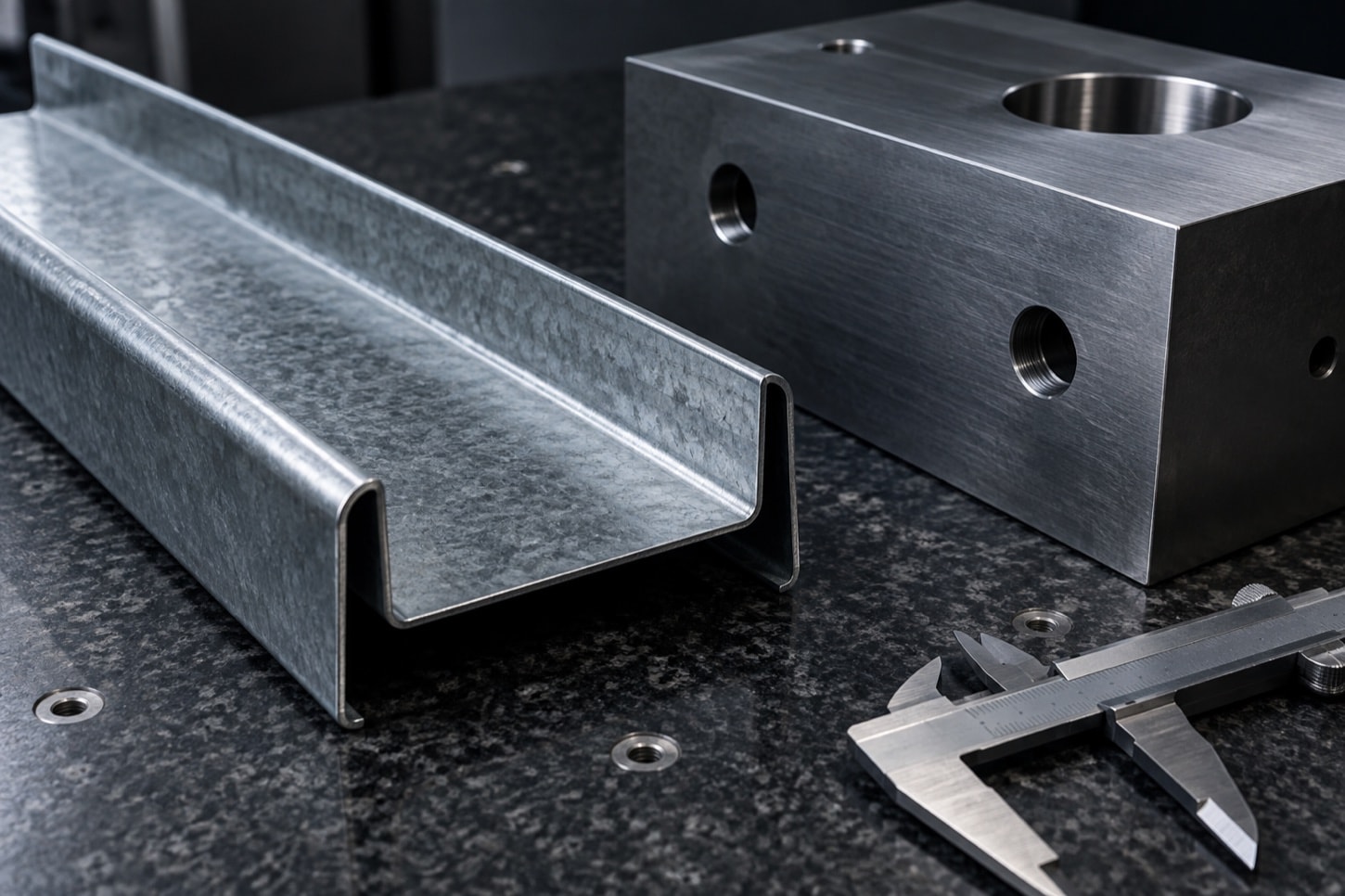
The milled receiver
A milled receiver begins as a substantial steel blank that is machined to create the internal tracks, openings and exterior form. The completed structure integrates features that a stamped receiver carries on separate pieces. On many AK-pattern examples, broad recessed lightening cuts on the receiver sides are the most immediate clue. The walls appear solid, and the stock attaches to geometry machined into or joined to the rear of that structure.
Machining allows complex geometry to be established in a single main piece, but it consumes machine time and removes a considerable amount of material. That manufacturing context helps explain why mature early AK production is associated with milled receivers and why the later AKM redesign pursued a different path.
The stamped receiver
A stamped receiver starts as sheet steel. Press operations cut and form the sheet into a shell with rails, folds and openings. Separate front and rear trunnions provide major structural interfaces, and rivets visibly join those pieces to the shell. The result distributes the receiver's functions across formed sheet, internal rails and attached blocks.
Stamped construction is not merely a milled receiver made thinner. Its geometry is a structural system designed around folds, local reinforcement and joined components. Rivet heads, dimples, pressed ribs and the shape of the magazine opening can all help identify a particular pattern. These visible cues are more reliable than assumptions based on furniture colour or general silhouette.
What wall thickness changes
The common Warsaw Pact AKM pattern is associated with receiver sheet approximately 1mm thick. A number of Chinese, Yugoslav, Finnish and related stamped designs use approximately 1.5mm sheet. All else equal, increasing sheet thickness increases bending stiffness and adds material. But “all else equal” rarely describes two complete rifles: folds, trunnions, heat treatment, rails, openings and local reinforcement also affect the structure.
Thickness is therefore a useful specification, not a verdict. It can explain why two stamped receivers feel different in hand or require different attachment geometry. It cannot by itself establish safety, reliability, service life or superiority. This site makes none of those claims about any national pattern or named maker.
A visual comparison
| Feature | Milled | Stamped |
|---|---|---|
| Main body | Machined steel structure | Formed sheet-steel shell |
| External side | Broad machined recesses are common | Rivets, folds and pressed contours are common |
| Front structure | Integrated into the machined body | Separate trunnion riveted into the shell |
| Rear attachment | Pattern-specific machined or joined geometry | Separate rear trunnion on common patterns |
| Mass and dimensions | Typically more material in the receiver body | Dependent on sheet thickness and reinforcement |
Identification should remain non-invasive. Look at exposed receiver surfaces, markings and existing contours; do not disassemble or alter an unfamiliar object merely to settle a web-page classification. A qualified professional can examine a specific rifle when condition or serviceability is at issue.
Keep the whole design in view
Receiver method influences furniture attachment, side-rail geometry, component dimensions and the visual rhythm of the rifle. It is one of the most valuable starting points for classification because it divides the field into meaningful families. From there, chambering, country, model marking and trunnion pattern refine the answer.
The furniture guide explains why a stock described only as “AK” may not match both receiver types. The variant guide then places construction alongside country and chambering. These are descriptive relationships, not fitting instructions.