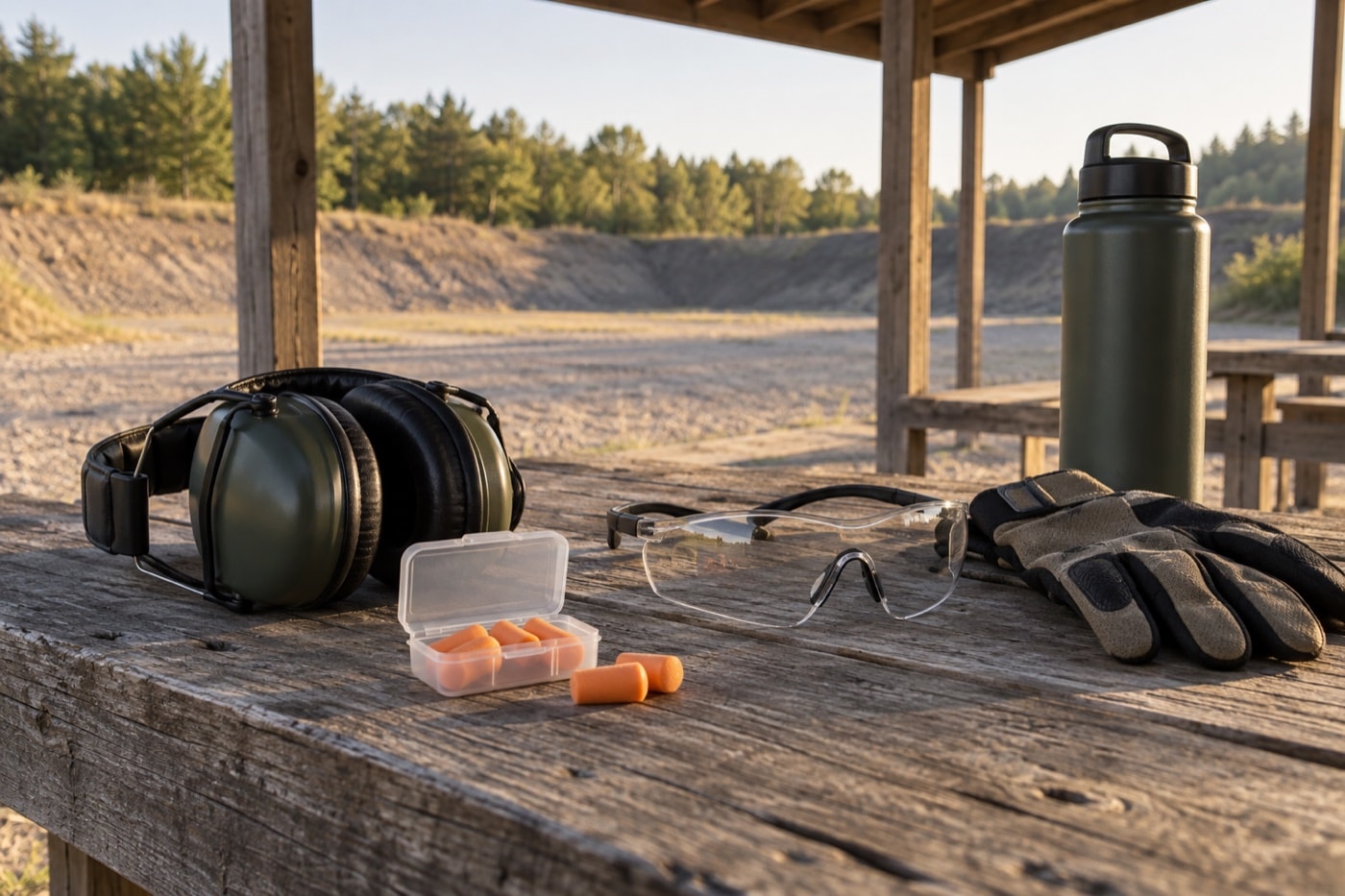
This page is about physical load and protection, not marksmanship. Follow the range officer's commands and the safety rules for the facility and firearm in use.
Repetition and shoulder loading
Recoil is a short impulse, but a long session turns that impulse into repeated contact at the shoulder. Stock shape, buttplate area, clothing, cartridge and muzzle configuration influence how concentrated that contact feels. A narrow or hard contact surface may feel unremarkable early and increasingly prominent as repetitions accumulate.
Pay attention to change over time rather than waiting for sharp discomfort. A shoulder that begins to feel tender, a stance that becomes guarded or a tendency to avoid the stock are all reasons to pause. This is not a test of endurance. Ending a string early preserves attention and reduces the temptation to compensate with awkward body positions.
Grip and wrist fatigue
The AK-pattern vertical pistol grip places the wrist and fingers around a relatively compact surface. Grip width, angle and texture vary by country and material. Supporting the rifle also loads the opposite forearm and shoulder, especially during repeated offhand handling. Heat at the handguard and the effort of holding the rifle away from a rest add to the fatigue picture.
Fatigue often appears as unnecessary tension: clenched fingers between strings, a bent wrist held rigidly or shoulders that remain raised. Set the rifle down in the safe condition required by the range whenever the hands need a genuine break. Gentle movement away from the firing line can restore normal range of motion without turning the session into an exercise programme.
Neck, cheek and stock geometry
Fixed stocks, underfolders, sidefolders and thumbhole stocks create different contact surfaces. Optic height adds another variable. If the eye line sits well above the stock, the neck may work harder to hold a repeatable view. If the stock contact is narrow, cheek pressure can become uncomfortable even when the shoulder feels fine.
Notice whether discomfort is building on one side of the neck or jaw. Changing equipment during a session is not always possible or appropriate, but taking a break is. Persistent pain, numbness, tingling or weakness is a reason to stop and seek appropriate professional advice, not something to work through for one more string.
Impulse noise and nearby shooters
Firearm sound is impulse noise, and range structures can reflect it. Muzzle brakes may direct more sound and pressure sideways, affecting adjacent positions as well as the person firing. The risk is not limited to the moment a person is behind the rifle; anyone under the same covered firing line shares the sound environment.
Use hearing protection rated and fitted for the environment, follow the facility's requirements, and keep it in place while the line is active. The NIOSH record on recreational-firearm noise discusses factors including muzzle brakes, number of shots, distance between shooters, environment and protector fit. General NIOSH hearing-protector guidance also explains why fit and compatibility with other protective equipment matter.
Eye protection and equipment interaction
Eye protection should remain clear, secure and compatible with hearing protection. Thick glasses temples can disturb an earmuff seal, while fogging can reduce visibility and concentration. Check that both pieces of equipment can be worn together before the line becomes active. Replace damaged protection rather than improvising around it.
Pace, hydration and attention
Long sessions combine noise, heat, repeated lifting and sustained attention. Schedule pauses before fatigue becomes obvious, drink water, and step into a quieter area when the range permits. A brief written plan for ammunition, ceasefires and stopping time can prevent the session from expanding simply because supplies remain.
The useful end point is not a round count. It is the moment when comfort, hearing protection, vision or attention begins to degrade. Pack up while safe habits still feel automatic. Range staff and qualified instructors control facility procedure; this page adds only the ergonomic reminder that bodies and attention have limits.